
May 23, 2026
Why Safe Rigging and Lifting Can Make or Break Your Next Industrial Project
Safe rigging and lifting is not just a compliance checkbox — it is the difference between a smooth project and a catastrophic, costly incident. Our Quick Start Guide to Safe Rigging and Lifting walks you through everything you will need!
Over a six-year period, crane-related fatalities in the U.S. averaged 42 deaths per year. More than half involved workers struck by falling objects or equipment. These weren’t all complex, first-time lifts either. Most crane accidents happen during routine operations — when familiarity breeds complacency.
For plant managers in food processing, chemical, or power generation facilities, the stakes are even higher. A single rigging failure can mean:
- Severe or fatal personnel injury
- Structural damage to critical equipment
- Unplanned downtime that ripples across production schedules
- Regulatory exposure and potential OSHA citations
Here is a quick overview of what safe rigging and lifting requires:
| Priority | What It Means |
|---|---|
| Know the Load Weight | Verify load weight within ±5% accuracy before selecting slings, hardware, or lifting equipment. |
| Inspect Every Shift | Inspect all slings, hooks, chains, and rigging hardware before each use in accordance with OSHA 1926.251. |
| Maintain Proper Sling Angles | Keep horizontal sling angles above 30° and ideally within the 45–60° range for safer load distribution. |
| Use Qualified Personnel | Only trained and certified riggers should direct lifts, secure loads, and oversee crane operations. |
| Communicate Clearly | Use standardized hand signals (ASME B30.5) or dedicated radio communication protocols during every lift. |
| Never Stand Under a Load | Establish strict exclusion zones and enforce them without exception throughout the lifting operation. |
This guide walks through everything a plant manager or operations leader needs to know — from hazard identification and OSHA compliance to pre-lift planning and critical mistakes to avoid.
Introduction
Implementing a strategy for safe rigging and lifting is the most effective way to mitigate risk and prevent costly downtime on industrial jobsites. In heavy manufacturing and power generation, equipment failure or improper load handling can lead to catastrophic structural damage and severe personnel injury. This guide provides plant managers and operations leaders with the technical framework required to maintain an accident-free environment during complex material handling projects.
TL;DR / Key Takeaways
- Verify Load Weight: Always determine total weight within +/- 5% accuracy before selecting rigging hardware.
- Inspect Every Shift: OSHA 1926.251 requires visual inspections of all slings and hardware before every work shift.
- Maintain Sling Angles: Avoid horizontal sling angles below 30 degrees; 45 to 60 degrees is the preferred safe range.
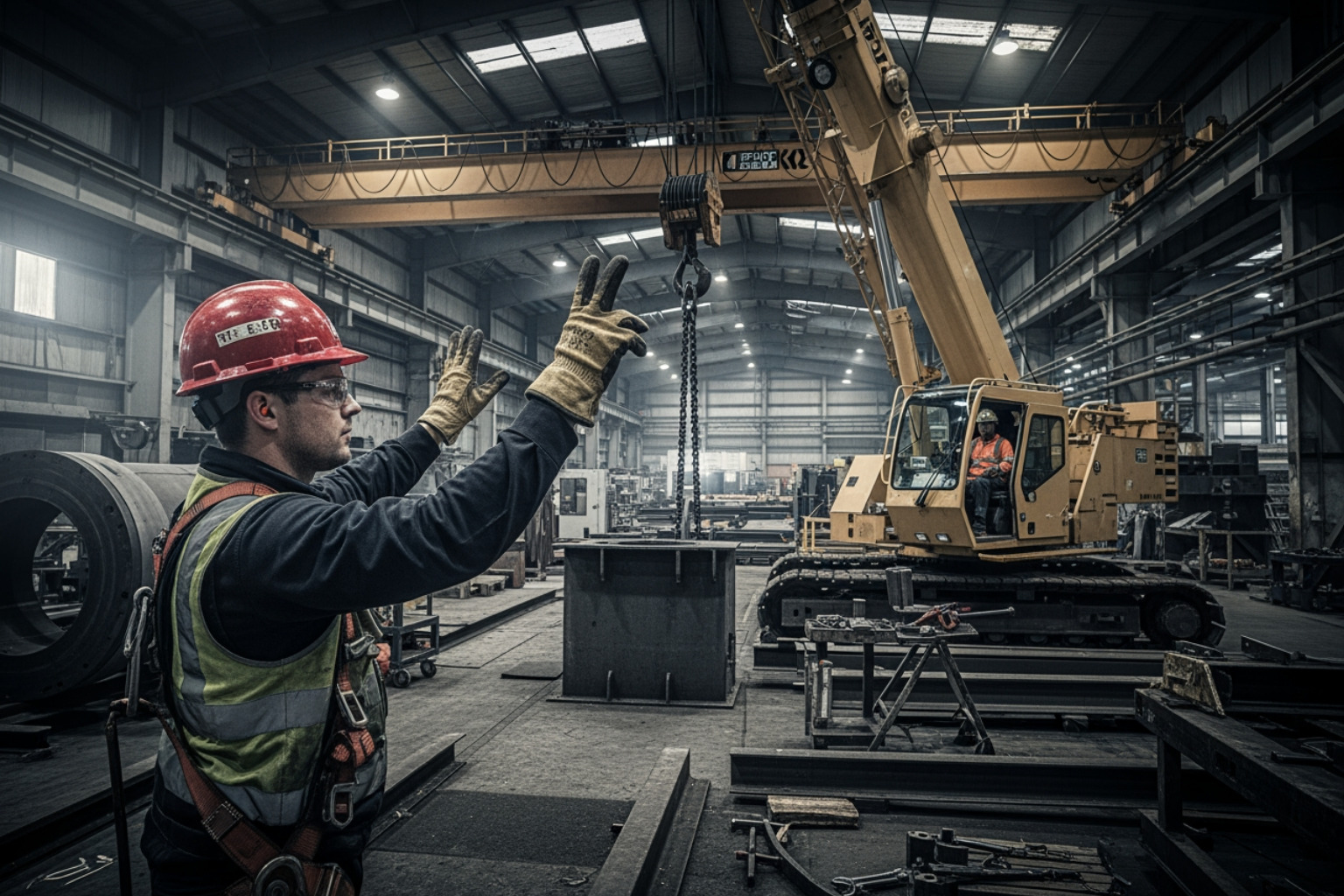
- Clear Communication: Use standardized ASME B30.5 hand signals or dedicated radio protocols to prevent movement errors.
- Qualified Personnel: Only trained riggers should direct crane operations and secure loads to prevent struck-by incidents.
Identifying and Preventing Common Hazards in Safe Rigging and Lifting
Rigging operations are inherently high-risk. Understanding where things typically go wrong is the first step in prevention. Most incidents stem from a combination of mechanical failure and human error.
- Struck-By Incidents: Statistics show an average of 42 crane-related deaths per year, with over half involving workers being struck by falling objects or equipment. These are often preventable through strict exclusion zones and proper heavy equipment moving safety tips.
- Equipment Failure: Rigging gear takes a beating. Prevent failures by removing any gear with visible broken wires, heat damage, or missing identification tags. If a sling looks questionable, it should be pulled from service immediately.
- Environmental Factors: High winds, poor lighting, and unstable ground surfaces must be assessed in every lift plan. In New England, changing weather patterns can quickly turn a safe lift into a hazardous one if wind speeds exceed the crane manufacturer’s limits.
- Crushing Hazards: Never allow personnel to stand or walk under a suspended load. Establish clear demarcations to keep non-essential personnel away from the “fall zone.”
The Seven Essential Rules for Safe Rigging and Lifting Operations
7 Essential Rigging Safety Rules Every Crew Should Follow
To ensure a safe and successful lift, every rigger and equipment operator should follow these seven core rigging principles. These are not suggestions — they are foundational safety standards used across industrial facilities, construction sites, and heavy equipment moving projects.
1. Know the Weight
Never estimate a load’s weight. Use shipping documentation, engineering drawings, or material weight tables before selecting lifting equipment. For reference, structural steel weighs approximately 490 lbs per cubic foot.
2. Select the Right Hitch
Choose the correct hitch configuration — vertical, choker, or basket — based on the load’s shape and center of gravity. Proper hitch selection improves stability and reduces swing risk during lifting.
3. Inspect Before Every Lift
Perform a visual inspection before each use. Check for excessive wear, cuts, deformation, broken wires, and missing capacity tags. If a sling tag is unreadable or missing, the sling should not be used.
4. Protect the Rigging Equipment
Use corner protectors and softeners when lifting around sharp edges. Under tension, exposed steel edges can quickly damage synthetic slings and compromise lifting safety.
5. Maintain Load Control
Use tag lines to guide loads and prevent uncontrolled rotation or swing. This allows crews to maintain safe positioning without standing near suspended equipment.
6. Verify Stability with a Trial Lift
Raise the load only a few inches initially to verify balance and center-of-gravity positioning. If the load tilts or shifts, lower it immediately and adjust the rigging setup.
7. Store Rigging Gear Properly
Store slings, chains, and rigging hardware in a dry, protected environment. Moisture, UV exposure, and chemical contamination can weaken equipment and shorten service life.
Technical Standards: Sling Angles, Load Weights, and OSHA Compliance
Compliance isn’t just about following the law; it’s about understanding the physics behind the lift. OSHA 1926.251 provides the regulatory framework, but the math determines the safety.
Calculating Load Weight for Safe Rigging and Lifting
Determining weight requires high precision. Industry standards, such as those in the Crane Training Handbook, suggest accuracy within +/- 5%.
For steel plates, use the formula: Weight = Area (sq ft) x Thickness (inches) x 40 lbs. For cylindrical objects, calculate the surface area and multiply by the material’s unit weight.
Understanding Sling Angles in Safe Rigging and Lifting
As the horizontal sling angle decreases, the tension on each leg increases exponentially. For instance, at a 30-degree angle, the tension on each leg is double what it would be in a vertical lift.
- 30-degree minimum: Never rig below this angle without specialized engineering approval.
- 60-degree preference: This is the “sweet spot” for most bridle hitches, providing a balance of stability and manageable tension.
| Sling Type | Key Removal Criteria | Best Use Case |
|---|---|---|
| Alloy Steel Chain | Excessive wear, stretched links, cracks, gouges, or visible nicks exceeding OSHA limits. | High-temperature applications and rugged industrial environments. |
| Wire Rope | More than 10% broken wires within 8 rope diameters, kinking, bird-caging, or crushing. | Heavy-load lifting and general construction or industrial rigging operations. |
| Synthetic Web | Acid or caustic burns, melted fibers, tears, punctures, or severe snags. | Fragile equipment, finished surfaces, and sensitive machinery components. |
Step-by-Step Process for Pre-Lift Planning and Execution
A successful lift starts long before the crane arrives. Following a structured process minimizes the chance of “on-the-fly” decision-making, which is where many mistakes happen.
- Determine Load Weight and Center of Gravity: Locate the CG within 6 inches. This ensures the load remains level when it leaves the ground.
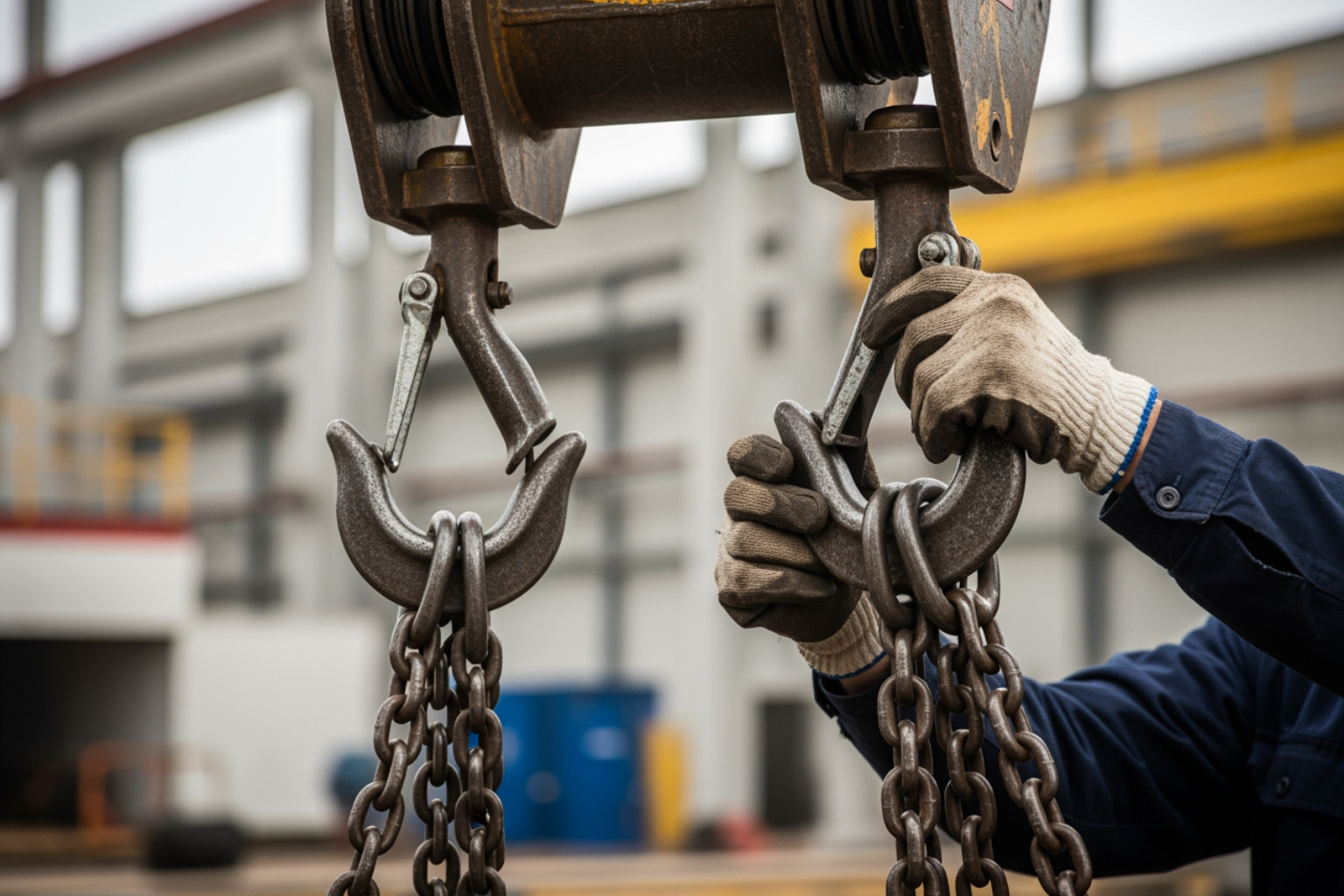
- Select Hardware and Slings: Check the Working Load Limit (WLL) of all components. Ensure the shackle pin is properly seated and the hook latch is functional.
- Conduct Pre-Shift Inspection: This is a legal requirement. Verify that all components meet ASME B30.9 (Slings) and ASME B30.26 (Hardware) standards.
- Establish Communication Protocols: Review standardized hand signals with the operator. If using radios, ensure a dedicated channel is clear of interference.
- Clear the Lift Path: Check for overhead obstructions and power lines. In Massachusetts and New Hampshire, always maintain minimum approach distances from energized lines.
- Execute the Trial Lift: This is the final check. If the load is stable and the rigging is seated correctly, proceed with the full move. Knowing how to prepare your facility for a rigging project ensures the landing area is ready for a smooth transition.
Critical Mistakes to Avoid When Planning Industrial Lifts
Even experienced teams can fall into traps. Avoiding these common errors is essential for safety.
- Ignoring Sling Angle Tension: Many riggers look at the vertical capacity and forget that angles change the math. Always use a tension multiplier for non-vertical lifts.
- Using Damaged Hardware: “Job-made” hooks or fasteners are a major liability. Only use hardware with legible manufacturer-rated capacities.
- Improper Wire Rope Clip Installation: Remember the industry saying: “Never saddle a dead horse.” The U-bolt must always be on the dead (short) end of the rope.
- Shock Loading: Abruptly starting or stopping a lift can double the effective weight of the load, causing catastrophic failure of the rigging.
- Inadequate PPE: Beyond the standard hard hat, riggers need heavy-duty gloves to protect against wire rope “fishhooks” and safety glasses for falling debris.
Knowing these common mistakes when hiring a rigging company can help facility managers vet their contractors more effectively.
Frequently Asked Questions about Safe Rigging and Lifting
How often should rigging equipment be inspected?
Rigging equipment must be inspected by a designated person before each shift. Additionally, a thorough periodic inspection (documented) should be performed at least annually, or more frequently based on the severity of use and environmental conditions.
What is the minimum safe sling angle?
Horizontal sling angles of less than 30 degrees are not recommended. As the angle decreases, the tension on each leg increases exponentially, which can quickly exceed the equipment’s Working Load Limit.
How do you determine the center of gravity for an irregular load?
For unknown or irregular loads, the center of gravity is found by performing a trial lift. If the load tilts when lifted, the hook is not over the CG and the rigging must be adjusted until the load lifts level. Referencing a Rigging & Lifting Handbook can provide formulas for common irregular shapes.
Conclusion
Safe rigging and lifting is a technical discipline that requires strict adherence to OSHA standards and engineering principles. By prioritizing thorough inspections, accurate weight calculations, and clear communication, facility managers can ensure their projects remain on schedule and accident-free. Atlantic Millwrights applies these rigorous safety protocols to every industrial contracting project, ensuring that complex mechanical systems are moved with precision and zero downtime.
If you are planning a machinery move or a complex lift and want to ensure it is executed with the highest safety standards, working with an experienced team is essential. Atlantic Millwrights serves New England, including New Hampshire, Maine, and Rhode Island, providing expert rigging services tailored to your facility’s needs.